Managing your vehicle registration properly is an essential part of owning a car in Colorado. Whether you’re selling a vehicle, buying a new one, or simply taking a car off the road, understanding how to transfer or surrender license plates can help you avoid penalties and stay compliant with state laws. If you’ve ever used a Colorado license plate lookup tool, you already know how important accurate registration records are.
This guide explains everything you need to know about transferring or surrendering license plates in Colorado, including when each process applies, the steps involved, and key tips to keep things simple.
Understanding License Plate Ownership in Colorado
In Colorado, license plates are typically tied to the vehicle owner, not the vehicle itself. This means that in many cases, you can transfer your existing plates from one vehicle to another rather than getting new ones every time you change cars.
The process is regulated by the Colorado Department of Motor Vehicles (DMV), which operates through county motor vehicle offices. While the rules are consistent statewide, the exact process may vary slightly depending on your county.
When You Should Transfer License Plates
Transferring your license plates is often the easiest and most cost-effective option when:
- You are replacing your current vehicle with a new or used one
- You still own the plates and they are valid
- You want to keep the same plate number (especially if it’s personalized)
Common Scenario: Buying a New Car
If you sell your old vehicle and purchase another, you can transfer your plates to the new vehicle instead of applying for new ones. This saves money on plate fees and keeps your registration history consistent.
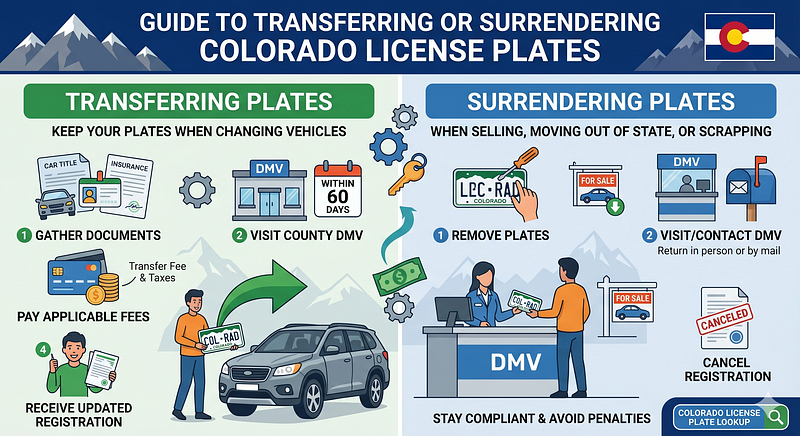
Steps to Transfer License Plates in Colorado
Here’s how the transfer process typically works:
1. Gather Required Documents
Before visiting your local county motor vehicle office, make sure you have:
- Proof of ownership (title or bill of sale)
- Valid identification
- Current registration for the old vehicle
- Proof of insurance for the new vehicle
2. Visit Your County Motor Vehicle Office
Plate transfers must be handled in person at your county office. You’ll submit your documents and request a plate transfer.
3. Pay Applicable Fees
While transferring plates is cheaper than issuing new ones, you may still need to pay:
- Registration fees
- Ownership tax (based on the new vehicle)
- Small transfer fee
4. Receive Updated Registration
Once processed, your plates will be officially assigned to your new vehicle, and you’ll receive updated registration documents.
Important Timing Rules
Colorado has strict deadlines when it comes to plate transfers:
- You generally have 60 days to transfer plates after selling or disposing of a vehicle
- Late transfers may result in penalties or additional fees
Using a Colorado license plate lookup can help confirm whether your plates are still active and eligible for transfer.
When You Need to Surrender License Plates
Unlike some states, Colorado does not always require you to surrender license plates when you no longer use them. However, there are certain situations where surrendering or canceling your plates is necessary or recommended.
You Should Consider Surrendering Plates If:
- You are moving out of state
- You are canceling your vehicle insurance permanently
- Your vehicle is being scrapped or totaled
- You want to avoid future tax or registration notices
How to Surrender License Plates in Colorado
The process for surrendering plates is relatively simple:
1. Remove Plates from the Vehicle
Once your vehicle is sold, totaled, or no longer in use, remove the license plates immediately.
2. Visit or Contact Your County Office
You can either:
- Return the plates in person
- Contact your county office for instructions (some allow mail-in returns)
3. Cancel Registration
Make sure your vehicle registration is officially canceled. This step is crucial to avoid future fees or taxes being charged to your name.
Do You Always Have to Return Plates?
In many cases, Colorado allows you to keep your plates after a vehicle is sold. However, keeping them without proper action can cause issues.
Risks of Not Surrendering or Transferring Plates
- You may continue receiving registration renewal notices
- You could be held responsible for tolls or violations if plates are misused
- Your name may remain associated with the old vehicle
To avoid this, either transfer the plates to a new vehicle or notify the DMV that the vehicle is no longer in your possession.
Special Cases: Personalized and Specialty Plates
Colorado offers a wide variety of specialty and personalized plates. These follow slightly different rules:
Personalized Plates
If you own a personalized plate:
- You can transfer it to another vehicle you own
- You must keep the registration active
- Additional fees may apply during transfer
Specialty Plates
Specialty plates (such as military or organizational plates) may have eligibility requirements. When transferring, you may need to:
- Provide proof of continued eligibility
- Pay renewal or specialty fees
What Happens After Selling a Vehicle?
Selling a car in Colorado involves more than just handing over the keys. You should:
- Remove your license plates
- Provide a bill of sale to the buyer
- Notify your county motor vehicle office
- Cancel or transfer your plates
Failing to complete these steps can lead to complications, especially if the new owner delays registering the vehicle.
Moving Out of Colorado
If you’re relocating to another state, handling your Colorado plates correctly is essential.
What to Do:
- Register your vehicle in your new state
- Cancel your Colorado registration
- Surrender plates if required
Each state has different rules, but taking these steps ensures you won’t face double registration or tax issues.
Using a Colorado License Plate Lookup Tool
A Colorado license plate lookup can be a helpful resource during both transfer and surrender processes. These tools allow you to:
- Verify plate status
- Check registration history
- Confirm ownership records
For more details and resources, you can visit
https://coloradolicenseplate.com/
Using such tools ensures that all information tied to your plates is accurate and up to date.
Tips to Avoid Common Mistakes
Many vehicle owners run into problems due to simple oversights. Here are some practical tips:
- Don’t leave plates on a sold vehicle — always remove them
- Act quickly — complete transfers within the allowed timeframe
- Keep documentation — save copies of all transactions
- Notify the DMV — even if you’re unsure, it’s better to report changes
Final Thoughts
Transferring or surrendering license plates in Colorado is a straightforward process once you understand the rules. In most cases, transferring plates to a new vehicle is the easiest option and helps you save money. However, if you no longer need the plates, properly surrendering or canceling them can prevent future complications.
By staying proactive and using tools like a Colorado license plate lookup, you can ensure your vehicle records remain accurate and compliant with state regulations. Whether you’re upgrading your car, moving out of state, or simply cleaning up old registrations, taking the right steps now will save you time and trouble later.